

You often want to start fresh projects, learn new skills, and leave your phone alone, but putting it down feels impossible. Even when you find yourself trapped in an addiction to endless feeds where every post feels repetitive, the urge to check just one more time takes over. Doing a social media detox does not require deleting every app or disappearing from the internet. Learning how to do a social media detox simply means taking a structured social media break, using intentional boundaries to figure out how to spend less time on social media, and applying realistic steps on how to stop scrolling without disrupting your daily life.
What Is a Social Media Detox?
A social media detox is a conscious choice to cut screen time and tame automated social media use. It turns mindless checking into intentional focus by silencing alerts, scheduling app-free blocks, and reducing digital distractions. Instead of feeding subtle social media addiction, this simple phone detox creates mental clarity and shows you how to stop procrastinating during your workday.
Digital Detox Meaning: How It Differs from Social Media Detox
The digital detox meaning is simple: using digital technology less intentionally, whether that means phones, laptops, games, or streaming. A digital detox is the wider category. A social media detox is a focused version of it, aimed at platforms built around feeds, likes, and comments.
That narrower target makes progress easier to measure. If you are asking how to digital detox your whole routine, start with your phone. A phone detox, meaning a practical digital detox phone setup, is often the simplest first step, and it gives you clear numbers to track, such as daily minutes in one app.
Why Try a Social Media Detox?
Mindless scrolling eats hours and rarely gives anything back. A social media detox works because it interrupts that pattern long enough for you to see it. Instead of reacting to every notification, you decide when to look. That small change frees time for work, reading, or the people you care about, and it makes focus easier to hold.
Most benefits people report come from using social media less, not from a single magic effect. Research on reducing social media use is mixed. Some studies link cutting back to better sleep, lower anxiety, or improved mood. Others find smaller or short-lived effects. Results also vary from person to person, and it is not yet clear how long any gains last.
Social Media Detox Benefits: What to Expect Realistically
Do not expect a dramatic change overnight. The first few days often bring boredom or a strong urge to check your phone. That is a normal part of changing a habit, not a sign that you failed. The main goal is control, not zero use. Many people find gradual reduction easier to sustain than stopping all at once. Choose a level you can keep for several weeks, then adjust based on what you actually notice.
Realistic Expectations | Pseudoscience Myths |
Noticeable reduction in daily screen time | Permanent "72-hour hard brain reset" |
Deeper sleep and fewer sleep disruptions | Total elimination of stress or anxiety |
Early boredom followed by better focus | Never feeling the urge to scroll again |
How to Start a Social Media Detox Without Deleting Every App
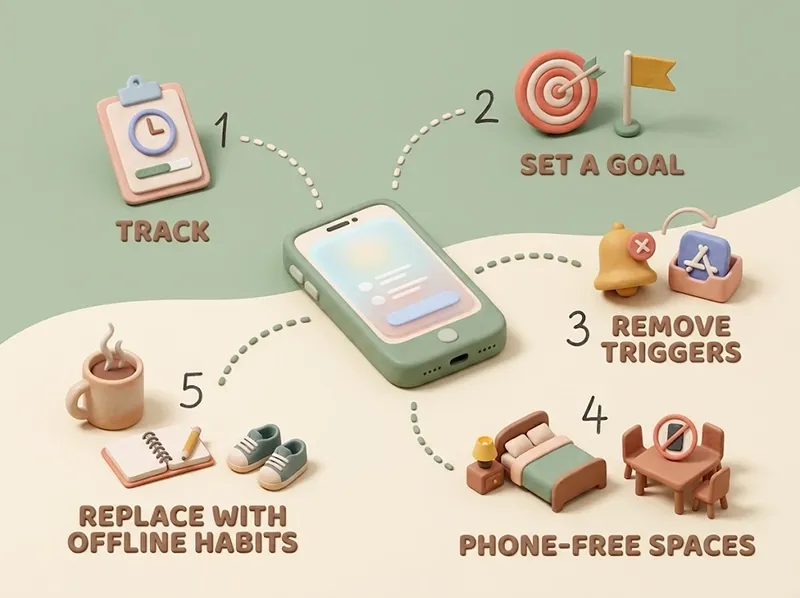
You do not need to purge every account to reclaim your attention. Building lasting digital discipline comes down to systematic adjustments.
1. Track Your Current Social Media Use
Open Screen Time or Digital Wellbeing to inspect your numbers. Notice which platform consumes the largest share of your day and when mindless scrolling peaks. Pinpointing whether your pickups are deliberate or purely reflexive provides the baseline needed to reduce social media use effectively.
2. Set One Specific Goal
Vague resolutions like "using my phone less" rarely hold up. Instead, anchor a concrete social media detox plan around measurable boundaries. Commit to phone-free meals, delay your first feed check until after breakfast, or apply clear phone-free habits that trim thirty minutes off daily use.
3. Remove the Triggers
Break automatic muscle memory before it starts. Turn off social media notifications, banish feeds from your home screen into buried folders, or log out after each session. Placing your phone across the room instantly curbs impulsive checks and silences nagging digital distractions.
4. Create Phone-Free Times and Places
Establish physical zones where screens simply do not belong. Keep devices entirely out of the bedroom, silence notifications during meals, and secure a daily offline window. Clear social media boundaries protect your evenings and turn every social media break into a restorative habit.
5. Replace Scrolling with a Specific Activity
When the reflex to scroll strikes, replace it with a low-friction tactile routine. Step away for a five-minute walk, read two pages of a physical book, brew a cup of tea, or write a quick note in your journal. Concrete offline activities prevent you from drifting back into old screen habits.
Choose the Right Digital Detox Phone Strategy
Configuring a dedicated digital detox phone setup shifts your device from a slot machine into an intentional tool. The goal is not tech deprivation; it is adding tactical friction to break automated muscle memory. Understanding how to make your phone less distracting starts with your operating system:
- Activate App Limits and Focus Modes: Cap social media apps at thirty minutes daily and silence alerts with Do Not Disturb during deep work blocks.
- Exile Feeds and Strips Widgets: Move social apps off your home screen into a distant folder, and delete all news or social widgets that bait your eye.
- Switch to Grayscale: Strip away bright notification badges and vibrant feed colors in your accessibility settings, neutralizing visual dopamine triggers.
- Charge Outside the Bedroom: Plug your phone into an outlet outside your sleep space and switch to a standalone analog alarm clock.
This system-level phone detox creates reliable screen time management without breaking essential daily communication. Pairing these friction boundaries with simple methods on how to stay organized makes your daily phone-free routine effortless to maintain.
Try a Simple Social Media Detox Challenge
Jumping straight into an intense 7 day digital detox often causes a sharp rebound binge once the rules expire. A streamlined, 5-day social media detox challenge builds steady behavioral traction instead of fragile perfection. Treat this five-day protocol like an operational reset:
- Day 1: Observe: Monitor your natural pickups without applying any artificial limits. Note which apps consume the bulk of your attention and pinpoint your primary boredom triggers.
- Day 2: Turn Off Notifications: Strip away all non-essential social banners, red badge counters, and lock-screen previews to cut reactive interruptions.
- Day 3: Create One Phone-Free Block: Schedule a continuous two-to-three-hour window completely free of social apps during your peak productive hours.
- Day 4: Replace One Scrolling Session: Substitute your typical late-afternoon or evening scrolling block with an active, physical offline habit.
- Day 5: Set Long-Term Rules: Lock in three sustainable non-negotiables for the weeks ahead (e.g., zero feeds before breakfast, no phones in the bedroom, and fixed check-in times).
This focused roadmap acts as an accessible entry ramp, offering more lasting value than a rigid weekend digital detox. By refining your social media detox plan into manageable shifts, taking a periodic social media break becomes a sustainable habit rather than a stressful endurance test.
Social Media Detox Side Effects and How to Handle Them
Stepping away from algorithmic feeds triggers predictable friction. During the first few days, you may encounter acute restlessness, intense impulses to reach into your pocket, and acute FOMO (fear of missing out). Many people catch themselves unlocking their screen subconsciously, only to redirect that scrolling urge into email or news apps. These behavioral hurdles are classic social media detox side effects resembling mild social media withdrawal.
To bypass severe rebound scrolling, lower your exposure gradually instead of quitting abruptly. Target the single platform causing your greatest distraction first, and pair every idle moment with a hands-on offline replacement. Learning how to stop checking your phone takes time; if persistent compulsive use impairs your sleep, daily focus, or relationships, explore clinical guidance on problematic interactive media use to address deeper patterns of phone addiction and master how to avoid social media addiction.
Common Questions About Social Media Detox
Can 3 Days Without a Phone Reset Your Brain?
The phrase 72 hour brain reset is popular online, but neuroscience does not recognize an instant chemical overhaul. While a 3 day digital detox cannot magically rewire baseline brain circuits, asking can 3 days without phone reset brain misses the real point: a seventy-two-hour pause is long enough to disrupt automatic motor habits, calm sensory overload, and expose underlying triggers.
How Long Should a Digital Detox Last?
Deciding how long should a digital detox last depends on your objective. Determining how long does it take to detox from social media is personal; an aggressive forty-eight-hour blackout works as a rapid system audit, but setting an ongoing thirty-minute daily cap offers superior long-term adherence and steady focus.
Is a Digital Detox Good for You?
Evaluating whether is a digital detox good for you requires nuance. While the tangible digital detox benefits and verified benefits of social media detox include deeper sleep cycles and reclaimed working hours, research confirms individual outcomes vary. Targeted daily restriction consistently outperforms total digital isolation.
How Does Social Media Affect Dopamine Levels?
Understanding how does social media affect dopamine levels comes down to variable reward schedules. Endless feeds, unread badges, and intermittent notifications trigger anticipation spikes rather than destroying neurochemistry. This unpredictable feedback loop reinforces a compulsive social media scrolling habit, gradually mimicking symptoms of social media addiction.
How to Avoid Social Media Addiction?
Learning how to avoid social media addiction requires four proactive boundaries:
- Silence all non-human push notifications.
- Designate fixed daily checking blocks instead of continuous monitoring.
- Add physical friction by logging out after every session.
- Build engaging tactile offline routines to master how to stop scrolling and permanently how to reduce social media use.
Conclusion
A successful social media detox is never about rigid perfection or retreating from the modern world; it is about intentional friction and building sustainable digital habits. You do not need to delete every profile overnight to feel the difference. Start with one micro-adjustment—leave your device charging outside the bedroom, mute non-essential alerts, and enforce firm social media boundaries. By sticking to two or three consistent rules and auditing your habits weekly, you create healthy social media use that protects your focus, preserves your time, and shows you how to spend less time on social media without constant friction.
Was this article helpful?
Next Article
Priorities in Life: How to Set Them and Make Better Decisions
Comments(0)
Be the first to leave a comment.