
Stress affects almost every adult, and much of it comes from the mind rather than the day itself. We worry about buying a home, choosing a career, getting married, or what the future will bring. I know this pattern well. For long stretches, I lived in tomorrow and asked the same question: what will happen to me next? Keeping everything in your head creates unnecessary mental pressure, and realizing that a system must fit real life rather than an ideal version of life changed how I approach daily calm. These mindfulness activities for adults provide a practical bridge back to reality.
I wrote before about how to pull yourself out of depression, which focused on finding a way out. This article takes a quieter, more preventive angle. Below are 10 methods for those who want to reduce stress and be more present. Each one has a clear time, simple steps, and a real-life use. Most of these practices require no equipment, no class, and no special space.
Everyday mindfulness does not mean sitting still with your eyes closed. You can practice it while breathing, eating, walking, or washing dishes through simple mindfulness routines designed to reduce stress and help you be more present.
What Is Mindfulness?
Mindfulness is simpler than most people think, stripping away the complex wellness myths to focus purely on active, present-moment awareness. In Wherever You Go, There You Are, Jon Kabat-Zinn describes it as awareness that arises through paying attention, on purpose, in the present moment, and non-judgmentally. I keep coming back to that definition because it is practical. You do not need a special state of mind; you simply need attention and a little honesty about where it currently rests.
In practice, mindfulness has three parts. You choose to pay attention, notice thoughts and feelings without judging them right away, and bring your attention back when it drifts. Most people skip that last step, yet it is the core mechanism that makes the practice work. Expect your mind to wander often, especially at first, without treating the distraction as a failure.
Good / Mindfulness Is | Bad / Mindfulness Isn't |
Noticing where your attention is | Emptying your mind |
Practicing in 1–5 minutes | Needing a class or cushion |
Returning after distraction | Never getting distracted |
10 Mindfulness Activities for Adults You Can Start Today
Mindfulness activities for adults do not need a quiet room or a free afternoon. The ten practices below take between one minute and about fifteen, and you can easily incorporate them at home, at your desk, while eating, or during a routine walk. Testing each method over several busy workdays revealed distinct practical outcomes: some instantly reset focus, while others required a brief adjustment period before becoming natural habits.
1. One-Minute Mindful Breathing
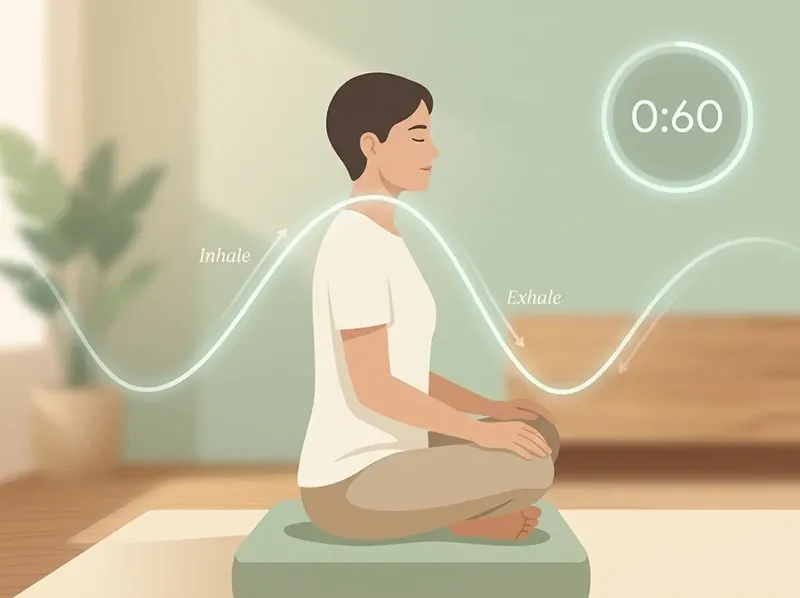
Start with the simplest tool you already possess: your breath.
- Sit or stand with your back straight and let your shoulders drop.
- Follow each inhale and each exhale for one full minute without artificially altering your natural rhythm.
- Notice precisely where the air feels clearest—perhaps at your nostrils or expanding in your chest.
- When your mind drifts toward a pending message or upcoming meeting, gently bring your attention back to the next breath.
Practical Application: This works seamlessly between busy work intervals. While medical guidelines list breath focus as a foundational practice, testing shows that committing to just sixty seconds is enough to break an autopilot stress loop during high-pressure workdays.
2. The 5-4-3-2-1 Sensory Grounding Exercise
When mental chatter turns into racing thoughts, shifting external sensory inputs can instantly pull your awareness back to the room.
- 5: Name five things you can see around you.
- 4: Name four things you can physically touch.
- 3: Acknowledge three distinct sounds you can hear.
- 2: Identify two scents you notice.
- 1: Name one thing you can taste.
Practical Application: Speak or think each item slowly. This method serves as a physical reset tool rather than a medical treatment; if chronic anxiety persists, professional support remains essential. In operational testing, focusing on auditory cues proved most effective in loud environments.
3. Mindful Eating: Notice Every Bite

Eating is one of the most frequent actions of your day, making it an ideal anchor for mindfulness in everyday life.
- Pause for a few seconds before your first bite to look at the colors and textures of the food.
- Notice the aroma before tasting.
- Chew slowly, put your cutlery down between bites, and keep your phone completely out of reach.
Practical Application: Disconnecting devices during a meal acts as a micro social media detox, cutting off digital interruptions. While initial attempts can feel uncomfortably slow, practicing this consistently shifts meals from a rushed chore into a genuine restorative break.
4. A Mindful Morning Routine
Your first ten minutes dictate the cognitive tone for the hours that follow.
- Leave your phone in another room until this brief sequence is complete.
- Sit on the edge of your bed and take three conscious breaths.
- Scan your physical body from your feet up to your shoulders.
- Select one single, realistic intention for the day, such as slowing down before replying to emails.
Practical Application: Avoid creating a long checklist that generates immediate morning pressure. Omitting early phone checks significantly stabilizes focus and reduces reactive decision-making throughout the day.
5. Mindful Walking

Walking meditation allows you to practice presence without remaining seated.
- Choose a short route, such as an office corridor, a park path, or the walk to your car.
- Focus entirely on the physical sensation of your heel touching the ground, followed by the rolling motion of the rest of your foot.
- Listen to ambient sounds without analyzing or labeling them.
Practical Application: As highlighted in Thich Nhat Hanh’s writing, ordinary transit moments become fertile ground for awareness when attention stays anchored in the current physical step rather than future tasks.
6. The Mindful Pause Before Reacting
High-stress moments often hinge on split-second interactions, such as an unexpected notification or a tense inquiry. Use a structured four-step framework:
- Stop: Freeze your immediate physical motion.
- Breathe: Take one slow, deliberate inhalation.
- Notice: Observe physical tension or emotional narratives forming in your mind.
- Choose: Decide on your next response consciously.
Practical Application: Apply a rule to let the phone ring once before answering or pause before hitting send on a sensitive message. This thirty-second buffer prevents automatic, defensive reactions.
7. Mindful Listening During Conversations

Traditional conversations often involve listening merely to prepare a counter-argument. Mindful communication shifts this dynamic entirely.
- Place your phone face down or out of sight.
- Let the speaker finish completely without formulating your reply in advance.
- Pay close attention to vocal cadence, tone, and body language.
- Pause for two seconds before answering.
Practical Application: This approach bridges solitary practice with interpersonal environments, yielding clearer mutual understanding and fewer professional or personal miscommunications.
8. Single-Tasking During Work or Chores
Multitasking fragments cognitive bandwidth, resulting in unfinished tasks and mental fatigue.
- Select one discrete task—such as drafting an email, organizing files, or washing dishes—and dedicate a strict twenty-minute window to it.
- Disable nonessential notifications.
- Focus explicitly on the physical mechanics of the work, like water temperature during dishwashing or keyboard tactile feedback.
Practical Application: Embracing single-tasking transforms routine chores into stabilizing anchors, making daily workloads feel significantly more manageable.
9. A Mindful Body Scan
A body scan provides a systematic method for releasing physical stress stored throughout the day.
- Lie down or sit in a comfortable, supported position.
- Direct your mental focus slowly from the crown of your head down to your toes, or vice versa.
- Acknowledge areas of tightness, warmth, or fatigue without attempting to force an immediate relaxation response.
Practical Application: Treating physical sensations with objective curiosity rather than frustration helps transition the nervous system into a restful state before sleep.
10. Evening Gratitude and Reflection
Close your day with an intentional, brief review rather than unstructured rumination.
- Identify one moment from the day that felt grounded or productive.
- Write down a single specific thing you are genuinely grateful for, keeping the entry concise.
- Set one clear, modest intention for the following morning.
Practical Application: Keeping reflection entries to a strict three-line limit prevents journaling fatigue, ensuring the habit remains sustainable and supportive over the long term.
How to Choose the Right Mindfulness Activity
Not every mindfulness activity fits every moment. A breathing exercise that steadies you before a presentation may feel flat after a long shift. The key is matching the practice to what you need right now, not to what looks best on paper. Use the quick guide below to find your situation and select the right tool immediately.
Choose an Activity Based on Your Current Need
Your Situation | Try This First | Also Useful |
Sudden stress | Mindful breathing | Mindful pause before reacting |
Anxiety or a scattered mind | 5-4-3-2-1 sensory exercise | Body scan |
At work | Single-tasking | Mindful listening |
Everyday life | Mindful eating | Mindful walking |
Start of the day | Mindful morning routine | Mindful breathing |
End of the day | Gratitude and reflection | Body scan |
Pick one row and stick with it for a week. Reading the article again will not change much. Practice will. Most people end up with one or two go-to activities, and that is exactly the goal of mindfulness activities for adults.
Start with the Activity That Feels Most Natural
- If focusing on your breath feels hard, start with mindful walking or mindful eating. Movement and food give your attention something concrete to hold.
- If you only have a minute, choose one-minute mindful breathing or a short mindful pause.
- If your body feels tight at night, a body scan is a better fit than a busy routine.
- If you enjoy creative tasks, sensory exercises or a short gratitude list may feel more engaging.
The best practice is not the one that looks most impressive on paper. It is the one you can repeat on an ordinary Tuesday afternoon. Many people find that fun mindfulness activities for adults, such as a slow walk or a few minutes of journaling, become enjoyable once they stop judging themselves.
If you want quick mindfulness activities for adults, begin with a one-minute practice and add time later, once the habit feels natural. If stress or anxiety affects your sleep, work, or relationships for several weeks, talk with a doctor. Mindfulness can support that care, but it does not replace it.
How to Start a Daily Mindfulness Practice
Most people do not fail at mindfulness because the practice is hard. They fail because they try to add a long session to a packed day. A better approach is to keep it small and attach it to something you already do.
Build Mindfulness Into an Existing Daily Habit
Start with one minute. A tiny practice you repeat is worth more than a long one you skip. Pick one activity and keep it for a week. Do not switch to a new method every day.
Then link the practice to a habit you already have. Good anchors include your morning coffee, your shower, a walk to the bus stop, or turning off the lights at night. You might practice mindful breathing after opening your laptop, mindful walking during a lunch break, or a short body scan before bed.
Set a fixed time, too. “Sometime today” usually means never. Also, do not expect your mind to go completely quiet. It will wander, and that is normal. Each time you notice the drift and return to your breath or your steps, you are doing the practice. Treat distraction as part of the work, not as proof that you failed.
Short, regular practice usually builds a habit more reliably than occasional long sessions. Everyday moments such as washing dishes, showering, or walking are natural places to start.
Myla Kabat-Zinn and Jon Kabat-Zinn’s book Everyday Blessings: The Inner Work of Mindful Parenting (1997) takes a similar view: ordinary routines can become a place for attention. It is written for parents, but its core idea applies to any adult with a busy schedule.
Conclusion
You do not need a perfect routine to benefit from mindfulness activities for adults. Start with one practice, such as a single breath before a reply or a short walk without your phone, and repeat it until it feels ordinary. Some days will be calm, and others will be messy. Both count. Over time, returning your attention again and again is what makes mindfulness work in real life.
Was this article helpful?
Next Article
Work-Life Balance vs. Integration: How to Balance Work and Personal Life
Comments(0)
Be the first to leave a comment.