
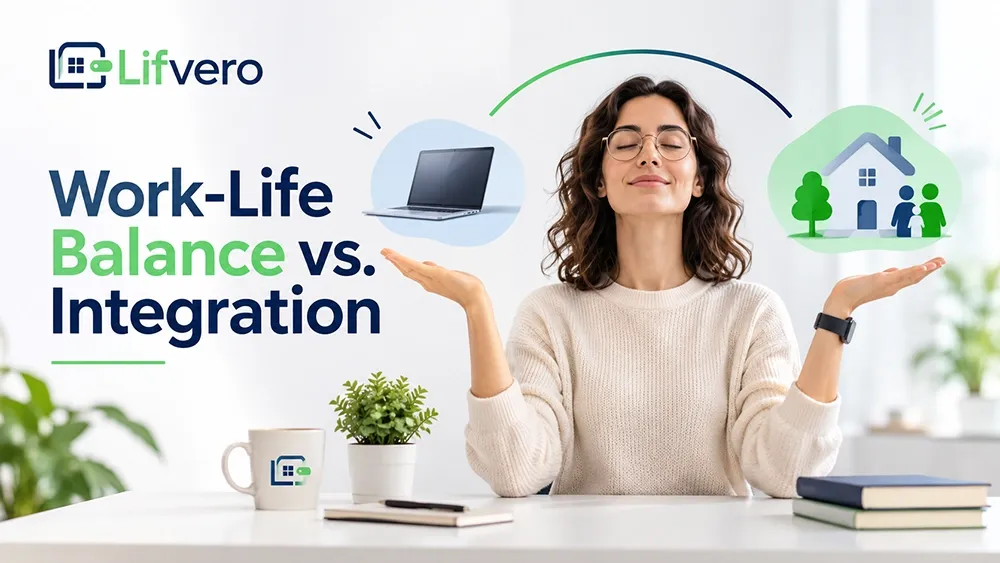
When you feel overwhelmed with life and daily responsibilities, keeping a steady work life balance can feel nearly impossible. In my own routines, holding every task in my head or stacking complex productivity apps only added friction until I tested simpler habits built around real schedules rather than ideal days. Meanwhile, strict separation doesn't fit everyone, which is why work-life integration is gaining ground as a more adaptable option.
In this guide, I unpack how work life balance integration compares with traditional separation so you can balance work and personal life without burning out. We will examine warning signs, self-assessment habits, and practical routines grounded in research and real-world testing. If you prefer listening or watching, check out the companion video or audio summary right below before jumping in.
What Is Work-Life Balance and Work-Life Integration?
Two models shape how most people organize their work and personal lives. Each one follows a different logic, and the difference affects every routine that follows.
What Is Work-Life Balance?
At its core, the real work life balance meaning is not a rigid 50/50 split on a stopwatch. A healthy work life balance depends on allocating time and energy with intention, so your job does not consume the capacity you need for family, health, rest, and hobbies.
When your working hours are fixed and predictable, strict separation is easy to maintain. Life balance gets harder once unexpected errands or family needs land on your calendar. A balanced work life protects personal space, but it also stays flexible enough to handle messy weeks. A balanced life is not one that never bends. It is one that bends without breaking.
What Is Work-Life Integration?
So, what is the meaning of work-life integration? Instead of drawing a hard wall between the office and home, work-life integration coordinates professional and personal tasks flexibly across the day. Wharton professor Stewart D. Friedman argues in Total Leadership that work, home, community, and self can support one another through “four-way wins” rather than compete in a zero-sum game.
So, what are work-life integration examples? Finishing deep project work early, running a midday errand, and returning to lighter tasks later all count. Effective work life balance integration, however, requires clear rules. When life integration turns into boundary-free work life blending, such as checking messages at dinner or at midnight, flexibility stops serving you and speeds up burnout. Work and life balance only holds when the flexibility has limits.
Why Is Work-Life Balance Important?
A healthy work life balance matters because work stress, poor sleep, and fatigue spill across your calendar rather than staying isolated. Gallup’s workplace research links chronic overwork to burnout and turnover, while studies highlighted by Harvard Business Review and Stanford show output drops sharply past 50–55 hours weekly.
In my own routines, protecting recovery time improved sleep, sharp focus, and relationships without turning my job into my entire identity. Balancing work and personal life for overall well being supports a healthy life balance and sustainable healthy lifestyle balance, while flexible integration works only when boundaries stay intact.
Work-Life Balance vs. Work-Life Integration
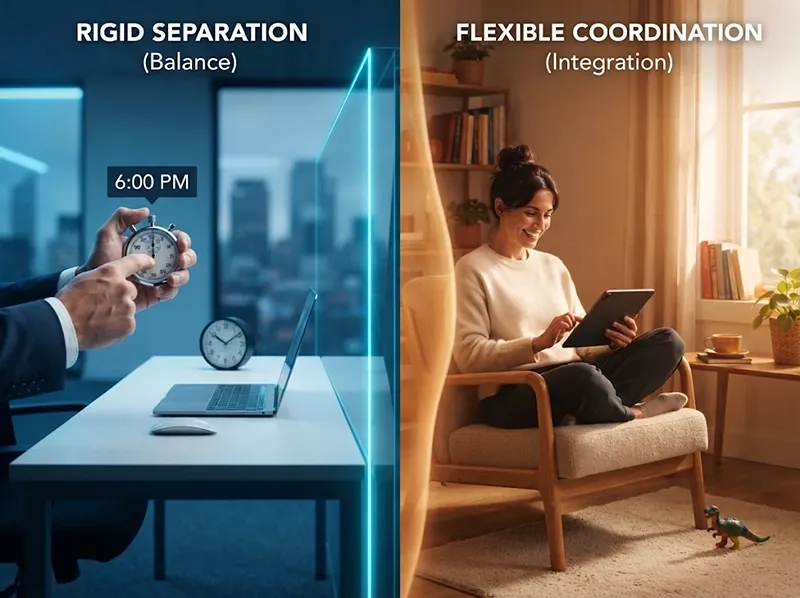
When comparing work life balance vs work life integration, the core shift lies in how you structure time versus energy. Traditional work-life balance separates work and personal life into distinct windows, while work-life integration coordinates both across the day with greater flexibility, as highlighted in comparative work-life research by Ellen Ernst Kossek and colleagues.
Criterion | Work-Life Balance | Work-Life Integration |
Core Idea | Separating work and life | Coordinating work and life |
Schedule | Fairly fixed | Flexible and adaptable |
Boundaries | Clear and distinct | Flexible yet essential |
Focus | Time and separation | Priorities, energy, and outcomes |
Best For | Structured roles and clear off-switches | Flexible roles, remote work, and shifting schedules |
Main Risk | Insufficient flexibility | Constant availability and burnout |
In my own tests of both approaches, neither model works universally. What you choose depends on your role, autonomy, family demands, energy curve, and ability to log off—alongside knowing your priorities in life so work does not crowd out what matters most.
Which Approach Is Right for You?
Choosing between work-life integration vs work-life balance comes down to whether crisp separation or daytime adaptability helps you execute better. Many professionals use a hybrid setup: firm boundaries on typical days and selective flexibility when life demands it.
Work-Life Balance May Be Better for You If
- You have a set, relatively predictable schedule.
- Work easily spills into your personal hours.
- You need clear boundaries to protect focus.
- You want a clean mental break once the workday ends.
- Structured routines help you stay calm and organized.
- Your job relies on shifts, on-site presence, or fixed hours.
Work-Life Integration May Be Better for You If
- You control much of when and where you work.
- Your role is outcome-driven rather than strictly tied to clock hours.
- Family or personal responsibilities shift during the day.
- You can move hours around without staying constantly online.
- Your focus and energy peak at different times of day.
- Schedule adaptability matters more than strict separation.
Good vs. Bad
- Intentional Integration: Shifting a midday block for a personal appointment, then closing work cleanly—protecting balance between work and personal life and keeping work and life balance sustainable, unlike rigid work-life integration vs work-life harmony debates that ignore real constraints.
- Unchecked Spillover: Treating work life balance integration as an excuse to answer messages late at night or skip real work life balance examples like logging off at a set hour.
Signs of an Unhealthy Work-Life Balance
An unhealthy balance does not always show up as marathon workweeks. Sometimes you log modest hours on paper yet never detach mentally, draining focus, sleep, and relationships while eroding work life and personal life balance.
In testing different tracking setups, I found that keeping everything in your head or stacking extra apps rarely fixes mental spillover. Pairing a simple weekly review with life with a paper planner helped me spot early friction before real work-life balance problems and solutions even needed major overhauls.
Common Signs Your Work-Life Balance Needs Attention
Watch for these common warning signs when your routine drifts off track:
- You regularly keep working past your planned end time.
- You check work messages or email during meals or right before sleep.
- Unfinished tasks keep running in the background when you try to rest.
- Sleep, exercise, or hobbies get cut repeatedly when schedules tighten.
- You feel guilty whenever you step away to relax.
- Friends and family get leftover time instead of real presence.
- You still wake up tired after the weekend.
- Small work requests trigger unusual irritation or anxiety.
- You lose track of when to stop for the day.
- Days off and holidays still feel tied to staying reachable.
Healthy integration means choosing when each responsibility happens on purpose. Unhealthy overlap happens when work intrudes on personal time by default, straining the balance between profession and family and eroding balance between work and personal life. Real work life balance solutions start with catching that drift early and protecting balance between work life and personal life.
How to Measure Your Work-Life Balance
Measuring your current setup takes more than counting hours at a desk. Sleep quality, steady energy, relationship time, and mental detachment tell a far more accurate story of how sustainable your days actually are.
Work-Life Balance Self-Assessment
Rate each statement below from 1 (rarely or never) to 5 (almost always):
- I finish work at a clear stopping time most days.
- I think less about work during personal hours.
- I get consistent, restorative sleep.
- I make time for family, friends, and personal interests.
- I can rest without feeling guilty.
- My workload is realistic to manage.
- I can say no or reprioritize when needed.
- Work and personal life do not steadily drain each other.
Score Interpretation:
- High score (32–40): Your current rhythm looks relatively steady—keep reviewing it weekly as demands shift.
- Moderate score (20–31): A few boundaries or daily habits need adjustment before strain builds.
- Low score (8–19): The issue often goes beyond time management alone—workload scope, team support, or role structure may need attention.
Work-Life Balance Examples in Everyday Life
Healthy routines look different across real schedules, and strong work life balance examples show how adaptable that can be:
- Finishing at 6:00 PM and muting work alerts until morning.
- A working parent blocking a set morning window on the calendar for school drop-off.
- A student mapping study blocks, sleep, part-time shifts, and social time ahead of the week.
- A remote worker keeping the work desk separate from evening relaxation space.
- Following a heavy workday with lighter tasks or active recovery the next day.
These scenarios show that a healthy work life balance and a balanced life do not follow one template. One person may thrive on strict separation, while another sustains balance between work and personal life through clear boundaries paired with selective flexibility.
Productivity Tip: Run a 10-minute weekly review every Friday—check what drained or restored your energy, and adjust one small habit rather than overhauling your whole system.
How to Improve Work-Life Balance With Work-Life Integration
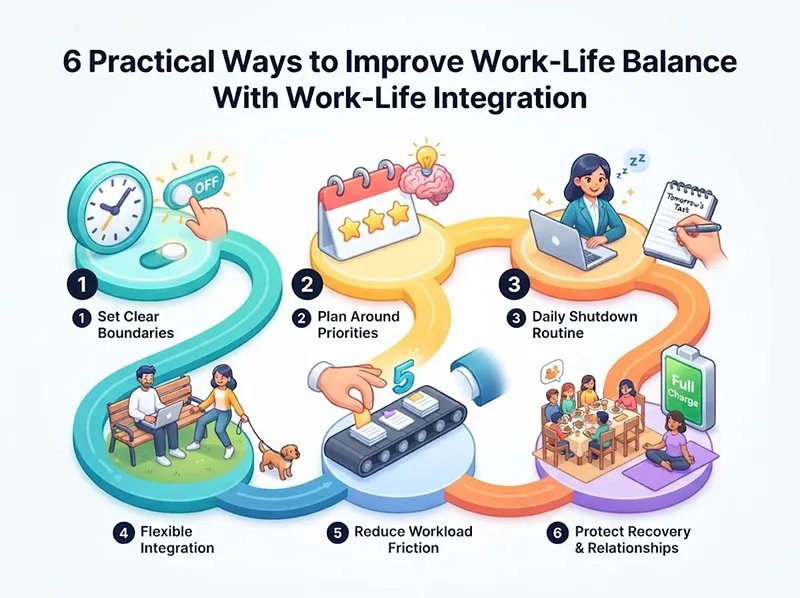
Rather than piling on a bloated checklist, focusing on six high-leverage habits gives you a practical way to put work life balance integration to work. Pairing clear boundaries with deliberate flexibility keeps your schedule adaptable without stretching the workday endlessly.
1. Set Clear Boundaries Before Adding Flexibility
Flexibility works best on top of a solid baseline. When I tested boundary rules, setting explicit guardrails first stopped small exceptions from becoming open-ended workdays.
- Define a clear start and end time for your core workday.
- Mute non-urgent work notifications after hours.
- Put personal time and rest blocks directly on your calendar.
- Agree on what counts as a true emergency versus routine follow-up.
2. Plan Around Priorities, Energy, and Personal Commitments
A calendar packed with low-value tasks leaves no room for what truly moves the needle. Overloaded task lists made daily execution feel heavy. Planning around real energy and real life kept things manageable.
- Pick your top three priorities before opening reactive messages.
- Match demanding analytical tasks to your peak focus window.
- Schedule sleep, family time, and workouts before filling leftover slots.
- Leave buffer time between blocks for unexpected delays.
3. Create a Daily Shutdown and Reconnection Routine
Mental carry-over keeps part of your brain on work long after you leave your desk. Drawing on Cal Newport’s shutdown ritual in Deep Work, a short closing sequence tells your mind that work is finished for the day.
- Capture loose tasks and open loops in one place.
- Write down your single first task for tomorrow morning.
- Close your laptop and step away from work screens.
- Silence work alerts and use a physical cue, such as changing clothes or taking a short walk, to shift into personal time.
4. Use Flexible Work-Life Integration Without Constant Availability
True integration gives you room to breathe during the day without turning you into a 24/7 help desk. Clear expectations around timing keep work life balance integration supportive rather than intrusive.
- Place personal appointments or errands in intentional daytime slots.
- Align expected response windows and availability hours with teammates.
- Protect real off-hours so flexibility improves your life instead of lengthening your workday.
5. Reduce Workload Friction and Ask for Support
Sometimes better habits cannot outrun an unrealistic workload or a fragmented schedule. Addressing friction early is a practical answer to work-life balance problems and solutions, for individuals and teams alike. This matters most when leaders look at how to improve work life balance for employees.
- Cut or shorten low-value meetings that break deep focus.
- Batch similar tasks, such as messages or admin, into set windows.
- Clarify top priorities with your manager when competing demands pile up.
- Flag unrealistic scope early, and consider a coach or mentor when you need an outside perspective.
6. Protect Recovery, Health, and Relationships
Finishing work on time is only half the equation if your body stays in stress mode. As Emily Nagoski explains in Burnout, completing the stress cycle through physical movement and genuine rest helps you reset. That reset supports how to improve work life balance over the long term.
- Protect consistent sleep and keep meals away from screens.
- Build regular movement and active recovery into your week.
- Set aside unhurried time for close relationships.
- Do a quick weekly check on what drains or restores your energy, so your work life balance solutions stay practical.
Conclusion
Sustainable work life balance is never a fixed formula—some people thrive with firm separation, while others sustain a balanced life through adaptable routines. Traditional work-life balance protects personal hours, whereas thoughtful work life balance integration adds flexibility without trapping you in constant availability. From real-world testing, the systems that last are simple, reviewed regularly, and built around real schedules rather than ideal days, protecting sleep, health, and relationships so you maintain a healthy lifestyle balance for years rather than abandoning a rigid plan within a month.
Was this article helpful?
Next Article
How to Reduce Food Waste at Home With Smart Home Habits
Comments(0)
Be the first to leave a comment.