

Most kitchen waste does not happen because people are careless. In my own kitchen, I noticed waste spiked whenever I tried to track every ingredient in my head. Without a simple system, half-used herbs and leftover dinner portions quietly slide to the back of the fridge. Nobody plans to throw them away—they simply get forgotten, which is why learning how to reduce waste at home starts with better visibility.
The scale of everyday household waste is hard to ignore. According to the UNEP Food Waste Index Report, households throw away over 1 billion meals every single day worldwide. Data from ReFED also shows that residential kitchens account for nearly 40% of all uneaten food in the United States. When extra food piles up on the table, it creates unnecessary household trash that harms both the environment and your monthly grocery budget.
Yet many households already handle this well through practical habits—cooking realistic portions, reusing leftovers, and separating food scraps from paper recycling. This guide builds on those proven routines. You will learn how to prevent food waste at home and how to reduce food waste at home using smart shopping, proper storage, and repeatable weekly habits rather than expensive kitchen gadgets—the foundation of a sustainable low waste lifestyle.
How to Reduce Waste at Home Before You Go Shopping
Most household trash does not begin at the kitchen bin—it begins in the grocery aisle. When I audited my own weekly spending, I realized that impulse buys and unverified pantry assumptions caused almost all of our spoiled food. Learning how to reduce waste at home starts before you ever leave the front door, using a simple pre-shopping routine to prevent overbuying.
Check Your Fridge, Freezer, and Pantry First
Walking into a supermarket without checking your shelves is the fastest way to buy duplicate ingredients. Taking three minutes to scan your kitchen gives you an accurate picture of what you already own and reveals how can I reduce waste at home without spending an extra dime.
- Scan every storage zone: Check the fridge, freezer, and dry pantry before opening your shopping list.
- Flag items nearing spoilage: Pull wilted greens, soft vegetables, and dairy close to expiration toward the front.
- Account for open packages and leftovers: Factor in half-used sauces, open grain bags, and cooked meals already waiting to be eaten.
- Eliminate duplicate purchases: Cross off staples you already have so you never buy a second bottle of olive oil or bag of rice by mistake.
Plan Your Shopping List Around Existing Ingredients
Once you know what is sitting on your shelves, build your weekly menu backward from those items rather than starting with random recipes. In my experience, anchoring meal prep to existing ingredients removes decision fatigue and cuts how to reduce trash at home down to a predictable, repeatable habit.
- Start with current inventory: List the perishable ingredients you already have on hand first.
- Choose meals around those items: Build two or three core dishes that directly use up those existing foods.
- Add only missing essentials: Write down only the complementary ingredients needed to complete those planned meals.
- Prioritize expiring ingredients early: Schedule dishes using delicate produce or open dairy for Monday and Tuesday.
- Match realistic weekly meals: Adjust your list for nights you plan to eat out, travel, or rely on leftovers.
According to the U.S. Environmental Protection Agency (EPA), checking your refrigerator, freezer, and pantry before shopping—and planning weekly meals around ingredients that need to be used up first—is one of the most effective ways to reduce food waste at the household level.
Buy Only What Your Household Can Use
Even a well-planned shopping trip can fall apart when store promotions tempt you into buying oversized packs. Just as installing a Home Energy Monitor reveals hidden electricity drain across your house, tracking realistic portion sizes exposes where grocery money quietly disappears into the trash.
- Match quantities to household size: Buy portions tailored to the actual number of people eating at home each week.
- Count real home-cooked meals: Calculate how many breakfasts, lunches, and dinners your household will genuinely prepare.
- Downsize perishable purchases: Buy smaller amounts of fresh berries, leafy greens, and bakery bread that spoil quickly.
- Question bulk deals and discounts: Treat "buy one, get one" offers on perishables with caution—throwing away half a bulk pack wastes 100% of the savings.
- Ask one filter question: Before placing any item in your cart, ask: "Will we realistically eat all of this before it goes bad?"
In her Waste-Free Kitchen Handbook, food waste researcher Dana Gunders notes that the average family discards roughly 25% of the food and beverages they buy—the equivalent of leaving one out of every four grocery bags in the store parking lot.
Smart Pre-Shopping Habit | Common Grocery Waste Trap |
Auditing fridge, freezer, and pantry shelves first | Guessing what you need while standing in the aisle |
Building your list around existing perishable items | Shopping from brand-new recipes every single week |
Buying exact quantities for realistic home meals | Grabbing bulk discounts on perishable produce |
5 Ways to Reduce Waste at Home With Smarter Food Habits
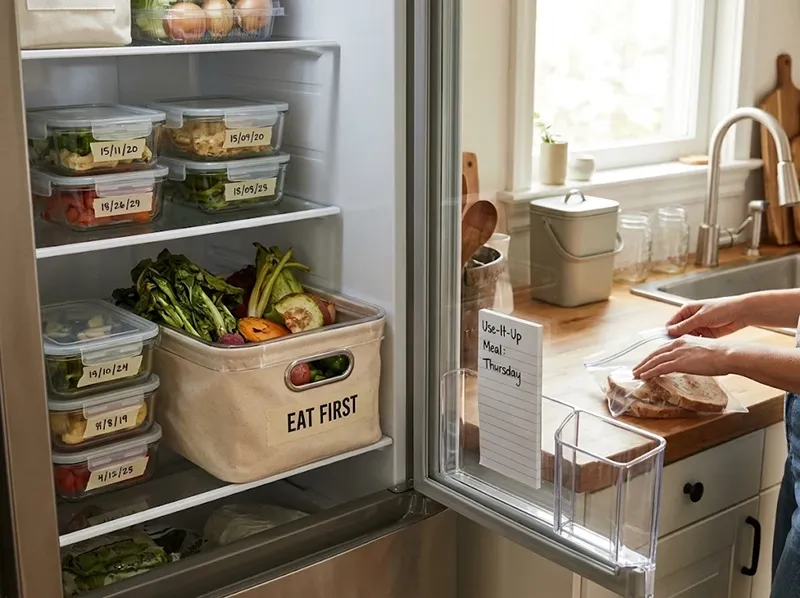
Cutting down daily trash and consuming food before it turns into unnecessary scraps is one of the smartest shifts you can make today. Generating excess garbage harms the environment, while throwing away edible ingredients wastes money and effort. These 5 ways to reduce waste at home rely on simple, repeatable kitchen habits rather than complicated tracking tools.
1. Create an Eat-First Zone
In my own kitchen, food usually spoiled simply because fresh groceries pushed older items out of sight. Setting up one dedicated eye-level shelf or clear bin changes that immediately, giving you one of the most simple ways to reduce waste without changing what you cook.
- Designate a clear priority spot: Reserve one visible bin or front shelf in your fridge and pantry for items nearing expiration.
- Keep priority foods front and center: Place opened sauces, soft produce, and expiring dairy right at eye level.
- Check this zone first: Make scanning the Eat-First bin your automatic first step before starting any new recipe.
- Include cooked leftovers: Store freshly cooked meals that need to be eaten within two days in the exact same spot.
2. Follow the First-In, First-Out Method
Commercial restaurants rely on First-In, First-Out (FIFO) rotation because it eliminates guesswork on busy days. Applying that same rule at home keeps older groceries moving forward and ranks among the easiest ways to reduce waste across your entire kitchen.
- Move older items forward: Shift existing yogurt cups, canned goods, and produce to the front of the shelf before unpacking new groceries.
- Place newly bought items behind: Stock fresh purchases at the back so you naturally reach for older food first.
- Apply FIFO across every zone: Use the same rotation habit in your refrigerator, freezer, and dry pantry.
- Write opening dates on packages: Keep a permanent marker in a kitchen drawer to jot the opening date directly on jars and cartons.
3. Use Clear Containers and Simple Labels
Opaque plastic tubs turn leftovers into mystery boxes that nobody wants to open three days later. Switching to transparent storage removes visual friction and directly tackles how to reduce food waste caused by forgotten meals hiding behind taller bottles.
- Store cooked food in clear containers: Use glass or transparent tubs so you can see exactly what is inside at a glance.
- Label every container clearly: Add a quick piece of masking tape noting the dish name and the date you stored it.
- Divide food into single-meal portions: Pack leftovers in realistic serving sizes so you only reheat what you will actually eat.
- Arrange items for visibility: Avoid stacking deep rows where small containers disappear behind milk jugs or condiment jars.
4. Freeze Food Before It Goes Bad
Most people treat their freezer like a long-term storage vault, but it works much better as a pause button. Freezing ingredients the moment you realize you will not finish them in time prevents spoilage before it starts.
- Freeze ingredients early: Move food into the freezer before texture or freshness begins to decline—not on the final day before spoilage.
- Portion into practical meal sizes: Freeze sauces, cooked grains, and proteins in flat, single-use packs that thaw quickly.
- Label with contents and dates: Write both the food name and freezing date on every bag or container so nothing turns unrecognizable.
- Focus on freezer-friendly staples: Sliced bread, raw or cooked meat, chopped ripe fruit, herbs in olive oil, and soups freeze reliably well.
5. Schedule a Weekly Use-It-Up Meal
Even an organized kitchen ends the week with stray vegetables, half a cup of cooked rice, or small portions of protein. Dedicating one fixed evening to clearing those odds and ends turns potential trash into an effortless dinner.
- Pick one consistent night: Choose a regular evening—such as Thursday night—as your household's weekly clean-out dinner.
- Combine leftovers into flexible dishes: Turn remaining vegetables, grains, and proteins into soups, frittatas, stir-fries, pasta bakes, or wraps.
- Build the meal around what is left: Let the contents of your Eat-First zone dictate the recipe rather than buying extra ingredients.
- Spot weekly waste patterns: Pay attention to which items show up repeatedly in your clean-out meal so you can buy less of them next week.
Smart Living Tip — The 10-Minute Sunday Inventory Reset: Every Sunday afternoon, spend ten minutes auditing your fridge before writing your grocery list:
- 1. Move expiring items into your Eat-First bin,
- 2. Rotate older pantry staples to the front, and
- 3. Freeze any bread, meat, or chopped produce you will not cook by Wednesday.
How to Reduce Food Waste at Home With Smart Kitchen Storage
Even the best grocery plan fails if food spoils two days after you unpack it. Understanding how to reduce food waste at home depends heavily on where and how you store each ingredient. A few intentional adjustments to shelf layout, humidity, and temperature can extend freshness by several days and simplify how to prevent food waste at home.
Organize Your Refrigerator by Priority
A crowded fridge blocks cold air and hides perishables behind tall bottles. WRAP’s Love Food Hate Waste guidance recommends keeping your fridge at 5°C (41°F) or below, which helps fresh food and dairy stay safe for longer.
- Keep expiring items at the front: Place foods that need to be eaten soon at eye level so they never get buried.
- Separate ready-to-eat foods from raw ingredients: Store raw meat and poultry on the lowest shelf to prevent cross-contamination and spoilage.
- Avoid overpacking shelves: Leave space between containers so cold air circulates evenly.
- Place everyday staples in plain sight: Keep milk, eggs, and frequently used condiments on central shelves, not the warmer door.
- Seal food in airtight containers: Prevent moisture loss and odor transfer by covering leftovers and cut ingredients tightly.
Store Produce According to Its Needs
Fruits and vegetables age at different rates depending on moisture and ethylene gas. Putting all produce into one crisper drawer is one of the fastest ways to lose fresh groceries before midweek.
- Give leafy greens proper humidity: Store spinach, lettuce, and herbs in the high-humidity drawer, wrapped lightly in a damp paper towel.
- Keep root vegetables cool, dry, and dark: Store potatoes, onions, and garlic in a ventilated pantry basket, not in the refrigerator, where cold temperatures change their texture.
- Separate ethylene-producing fruits: Keep apples, bananas, avocados, and pears away from ethylene-sensitive produce such as broccoli, leafy greens, and carrots.
- Delay washing until right before eating: Rinse berries and grapes just before serving so extra moisture does not trigger early mold.
Understand Food Date Labels
Confusion over date stamps sends many safe, edible meals into the bin. A report by the Harvard Food Law and Policy Clinic and NRDC explains that date labels on most packaged foods are not safety indicators, yet people often read them that way.
- Know “Best Before” versus “Use By”: A Best Before date reflects peak flavor and texture. A Use By date marks the last day a perishable food is recommended for safe consumption.
- Do not confuse quality with safety: Dry pasta, canned goods, and many dairy products often stay safe past their Best Before date when stored properly.
- Follow package storage instructions: Guidance such as “refrigerate after opening” or “consume within three days of opening” applies once the seal is broken.
- Never risk questionable food: If meat, seafood, or dairy smells sour, feels slimy, or shows mold, throw it out.
Use Simple Technology Instead of an Expensive Smart Refrigerator
When I first tried a detailed inventory app at home, I stopped using it within two weeks. Every update felt like extra work. Smart living does not require a high-end touchscreen fridge. Lightweight digital habits protect your time and support a healthier work and life balance.
- Track pantry staples in a phone note: Keep one pinned note listing freezer proteins and open dry goods, so you can check it in seconds at the store.
- Set quick expiration reminders: Use your phone’s calendar to trigger a 48-hour alert when you open perishables like broth, cream, or fresh fish.
- Maintain a shared grocery list: Use a free shared list app so anyone at home can add missing staples the moment a jar runs empty.
- Post a simple fridge-door checklist: Jot down three priority ingredients to cook this week on a small magnetic notepad.
Smart Kitchen Storage Habit | Common Storage Mistake |
|---|---|
Keeping the fridge at 5°C (41°F) or below, with open airflow | Cramming shelves full and storing milk in the warm door |
Separating ethylene-heavy fruits from delicate leafy greens | Tossing apples, bananas, and spinach into the same drawer |
Using phone reminders and a magne | Relying on memory to recall what is in the back of the fridge |
Final Takeaway: Small Smart Habits Can Reduce Food Waste at Home
Learning how to reduce waste at home does not depend on extreme rules or expensive kitchen upgrades. When you combine pre-shopping awareness with simple storage and leftover routines, cutting down kitchen trash becomes an automatic weekly habit rather than a daily chore.
Build a Simple Routine You Can Repeat Every Week
In my experience, any kitchen system that feels complicated gets abandoned during a busy week. A reliable routine works best when it stays lightweight, predictable, and easy to repeat every Sunday.
- Audit your shelves before shopping: Check the fridge, freezer, and pantry first so you never buy duplicate groceries.
- Write your list around existing ingredients: Plan meals using perishable items you already own before adding anything new.
- Rotate stock using the FIFO method: Move older jars, dairy, and produce to the front and place fresh groceries behind them.
- Label cooked food clearly: Store leftovers in transparent containers with the dish name and date so nothing gets forgotten.
- Close the week with a Use-It-Up meal: Dedicate one fixed evening to turning stray vegetables, grains, and proteins into soup, pasta, or a stir-fry.
Start With One Habit and Improve Over Time
You do not need to transform your kitchen into an overnight zero waste lifestyle to see real results. As chef and author Anne-Marie Bonneau famously wrote in The Zero-Waste Chef: "We don’t need a handful of people doing zero waste perfectly; we need millions of people doing it imperfectly."
Conclusion
Lasting progress in learning how to reduce waste at home never comes from one dramatic kitchen overhaul; it comes from small, repeatable decisions that fit your real weekly schedule. By auditing your shelves before shopping, keeping priority foods visible, and giving leftovers a second life, you protect both your grocery budget and the environment without extra stress. Pick one habit today, stay consistent, and let smart kitchen routines do the rest.
Was this article helpful?
Comments(0)
Be the first to leave a comment.