
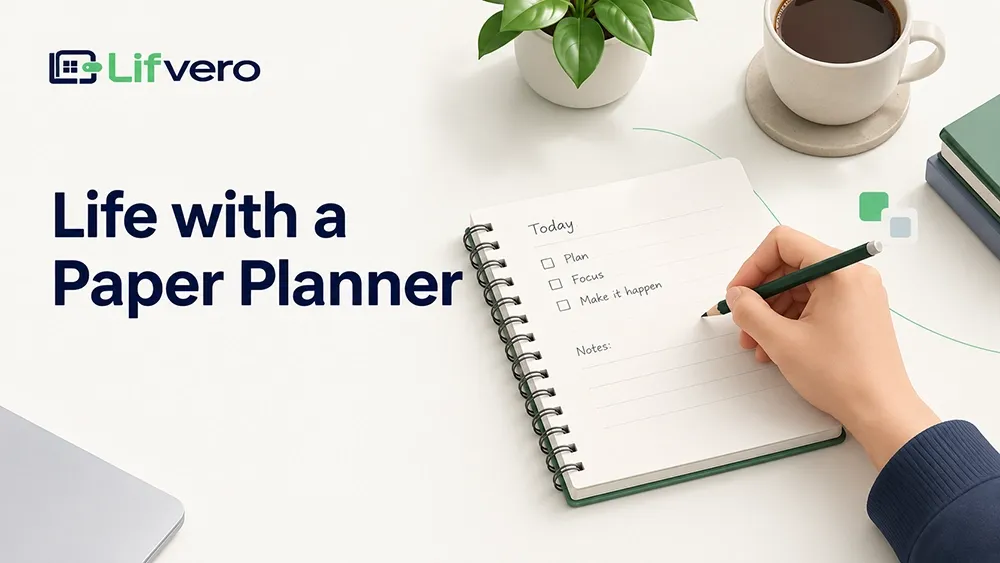
So much of our daily chaos simply melts away when you pick up a paper planner and put pen to paper. We often carry dozens of loose plans, urgent deadlines, and mental errands in our heads, and without a visible structure, it quickly turns into pure brain fog. You feel lost, scattered, and frozen before your morning even starts. Yet, externalizing those swirling thoughts onto an open sheet instantly brings order to the mess. It grounds your energy.
As productivity expert David Allen reminds us—a principle I love repeating because it completely rewired how I work—your mind is for having ideas, not holding them. Holding everything internally is precisely why we get paralyzed. The moment you map your daily priorities on real paper, you stop hoarding mental friction and start moving with quiet confidence. A single blank page can resolve what ten productivity apps fail to fix.
Paper Planner vs Digital: Why Do People Still Use Paper Planners?
Whenever life feels like too much, staring at a bright screen usually makes it worse. We often debate the trade-offs of a paper planner vs digital tool, thinking a new app will instantly fix our productivity. Yet opening a phone to check your schedule immediately exposes you to red badges, text messages, and algorithmic temptations. Real order begins when you close those browser tabs and let your hands do the thinking.
Understanding What Is Life Management? starts with recognizing how much energy goes into fighting digital interruptions. Choosing a tangible notebook is not an old-school quirk; it is an active defense for your sanity. Writing manually slows down the frantic pace of the day, turning an abstract list of duties into something concrete you can touch, review, and handle one item at a time.
Are Paper Planners Better for ADHD and Mental Focus?
For anyone battling attention fatigue or ADHD, screens add endless friction with glowing alerts fighting your impulse control. A simple desk pad offers zero algorithmic pull—no pop-ups, battery warnings, or tempting feeds. You face your commitments without digital noise pulling you off course. Whenever my own brain feels knotted and overwhelming, pen and paper untangle it completely; studies confirm that handwriting activates far more elaborate neural connectivity patterns than typing on a keyboard ever can.
The Tactile Advantage: Memory Retention and Less Screen Fatigue
Typing notes onto an app feels fast, but speed often works against deep comprehension. When you tap keys, your fingers carry out identical movements, letting tasks slip through your working memory. In contrast, putting pen to physical fiber requires tactile synthesis. The physical effort forces your brain into deeper cognitive processing, helping your schedule stick in your mind long before you glance at the sheet again.
Feature / Criteria | Traditional Paper Planner | Digital Planner Apps |
Focus & Distraction | Zero pop-ups, ads, or algorithmic pulls | Constant risk of notifications and tabs |
Memory Retention | Tactile handwriting encodes deeper recall | Passive typing fades quickly from memory |
Visual Boundaries | Natural limits on how much you can fit | Endless lists that encourage overbooking |
Eye Strain | Zero glare; restful for evening reviews | Adds to cumulative daily screen fatigue |
Deciding between a digital planner vs paper planner rarely comes down to fancy features; it comes down to protecting cognitive bandwidth. Studies comparing paper with keyboards reveal that writing by hand prompts your mind to summarize and prioritize naturally, rather than mindlessly collecting endless to-do entries you will never finish.
Productivity Tip (Cognitive Offloading): Writing things down on real paper grants both implicit and explicit permission to the brain's internal loops to let go. Once a commitment lives safely on a physical sheet, the prefrontal cortex relaxes its circuits, freeing up mental space for deep focus.
Choosing Your Setup: Daily Planner Paper, Formats, and Layouts
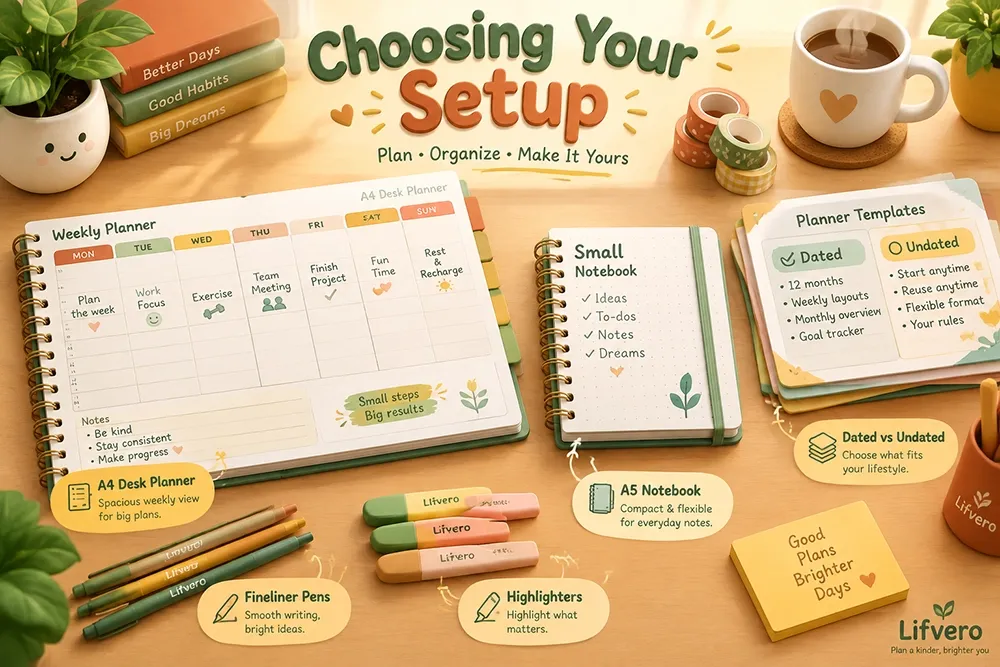
Finding the right system often feels overwhelming simply because the stationery aisle looks endless. When I bought my first planner, I grabbed a rigid calendar with strict hourly slots, only to abandon it within two weeks. Success comes down to your personal workflow, not fancy designs. Selecting the right daily planner paper and layout creates a natural habit loop, making your planning sessions feel grounding rather than like another demanding chore.
Before spending money on luxury leather covers, examine how your brain naturally organizes commitments. Some people crave rigid structure to stay accountable, while others need blank margins to brainstorm and sketch out workflows. By understanding the distinct differences between dated frameworks, paper textures, and page orientations, you can effortlessly configure a physical workspace that supports your goals instead of getting in your way.
What is the Best Type of Planner: Dated vs Undated Planners
The biggest choice you will face is deciding between a pre-printed calendar and an open, undated notebook. A dated version works best if your days follow fixed client meetings, school terms, or routine business appointments. However, missing several days in a dated layout often creates unnecessary guilt. An undated pad allows you to step away for a week, return without wasting sheets, and pick up right where you stopped.
Feature / Match | Dated Paper Planner | Undated Paper Planner |
Best For | Fixed routines, appointments, corporate schedules | Flexible routines, project sprints, fluctuating workloads |
Guilt Factor | Blank pages feel like failure after a break | Zero waste; resume planning anytime seamlessly |
Setup Time | Ready out of the box with calendars printed | Requires writing down dates and months manually |
Lifespan | Locked into a single calendar year | Lasts until the final sheet is filled |
Notebook Sizes and Paper Quality (From A4 Planner to Pocket Grids)
Paper thickness directly shapes your daily experience. Standard office copy paper sits around 70 to 80 GSM, which easily bleeds through when using gel pens or highlighters. For a seamless feel, aim for at least 100 to 120 GSM paper stock. This heavier weight prevents distracting ghosting on the opposite side of the page, keeping every single spread crisp, clean, legible, and visually inviting.
- A4 Planner (Desk Bound): Generous surface area for project managers mapping out wide weekly spreads, though too bulky for daily commutes.
- A5 Notebook (The Sweet Spot): Portable yet spacious enough for comprehensive task lists, fitting effortlessly into backpacks and everyday totes.
- Dot Grid Paper: Offers invisible guidance for bullet systems, giving you freedom to draw boxes or write straight notes.
- Lined & Grid Paper: Classic choices tailored for heavy text journaling, detailed financial logs, or precise habit tracking.
The Core Method: Prioritizing Your Life with Paper Planning in 3 Steps
Learning the art of prioritizing your life is truly essential for real peace of mind. Whenever I try to chase ten goals at once, exhaustion follows quickly. Establishing clear hierarchies makes every single daily action significantly easier, transforming how you stay genuinely organized in life. Instead of reacting blindly to incoming emergencies, an analog framework lets you pause, evaluate your energy, and tackle what genuinely moves the needle.
Many people wonder how to reset daily life when their schedules fall into utter disarray. The answer does not require radical life overhauls or complex software setups. It simply requires a physical pen, an empty spread, and a willingness to separate urgent noise from meaningful progress. By using a grounded three-step sequence, you turn an intimidating mountain of obligations into a calm, structured routine you can actually sustain.
How to Fully Reset Your Life with a Master Brain Dump
Whenever mental clutter paralyzes my workflow, I turn to a blank page for an emergency reset. As David Allen famously stated, “Your mind is for having ideas, not holding them.” Holding dozens of loose commitments internally burns out your prefrontal cortex. Sit down, set a timer for ten minutes, and write down every single lingering task, errand, and worry without editing until your mind feels completely empty.
The 3-2-1 Method of Journaling for Priority Setting
Long to-do lists are productivity traps because they treat answering a quick email with the same importance as finishing a major project. Once your brain dump sits on paper, apply the intuitive 3-2-1 framework to establish healthy daily boundaries:
- 3 Vital Daily Tasks: Non-negotiable priorities that directly align with your most important professional or personal outcomes.
- 2 Focused Weekly Projects: Key initiatives that need steady progress across the week without demanding all-day sprints.
- 1 Essential Wellness Habit: A restorative anchor, such as a thirty-minute walk or reading, to protect your physical energy.
Time-Blocking: Turning Priorities into Actionable Hours
Writing a list is only half the battle; assigning realistic space on the clock makes it happen. Avoid scheduling rigid minute-by-minute slots, as unexpected calls will shatter your optimism. Instead, carve out broad ninety-minute blocks dedicated solely to your three priority tasks. Protecting these focused windows on paper builds a tangible fence around your attention, ensuring external requests never derail your deepest daily work.
4 Simple Journal Ideas for Beginners to Organize Daily Tasks
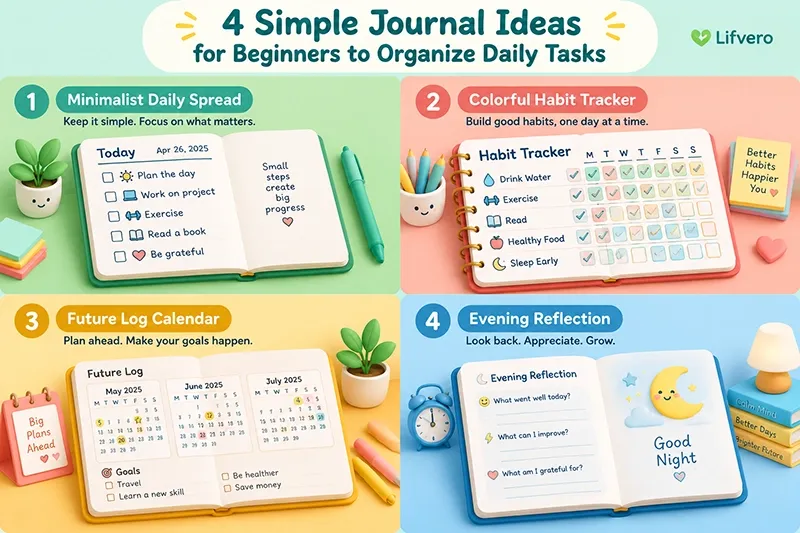
Starting an analog routine should never feel like an intimidating art contest. When I first explored journal ideas for beginners, I wasted hours drawing decorative banners instead of actually doing work. You do not need calligraphy skills or complex spreads; practical daily bullet journal ideas should simply keep your mind calm, sharp, and execution-focused. By sticking to functional minimalism, these four foundational layouts transform an empty notebook into a clean command center for your everyday commitments.
The Minimalist Bullet Journal Daily Spread
The cornerstone of rapid tracking is a clean bullet journal daily spread. In his foundational book, The Bullet Journal Method, creator Ryder Carroll designed rapid logging to cut through mental clutter quickly. Instead of writing paragraphs, use three basic shorthand keys: a simple dot (•) for actionable tasks, an open circle (○) for appointments, and a dash (–) for quick reference notes or ideas.
• Finish draft for Lifvero article (Task)○ 2:00 PM - Team sync call (Event)– Client loved the initial mockups (Note)
A Visual Habit Tracker to Build Consistency
Tracking routines visually reinforces your progress without adding cognitive friction. Draw a modest five-line grid across the bottom margin of your weekly page to record three or four non-negotiables, such as drinking water, walking, or twenty minutes of reading. Ticking off physical boxes creates an immediate tactile dopamine hit, nudging you toward consistency without demanding complicated digital dashboards or intrusive reminder alarms.
The Bullet Journal Future Log for Long-Term Goals
Daily logs handle immediate steps, but long-term commitments need an overview to prevent surprises. Divide a two-page spread into six clean blocks, assigning one month to each section. This future log acts as a holding bay for upcoming doctor appointments, project deadlines, and travel arrangements. Glancing at this spread during your weekly review ensures no vital milestones sneak up on you unawares.
To keep extended horizons grounded, anchor the top margin with curated inspirational quotes about life. Having a guiding principle visible beside distant deadlines transforms sterile date-tracking into purposeful, long-term personal growth.
A 3-Minute Evening Reflection Spread
Closing out the day with a short reflection helps your mind disconnect from lingering work stress. Dedicate the bottom three lines of your daily page to note one win, one lesson, and what to drop tomorrow. Writing this quick recap creates a distinct psychological boundary between your professional responsibilities and personal evening rest, helping your brain wind down effortlessly before bed.
How to Stick to Your Paper Planning Routine Without Burning Out
Maintaining consistency with a paper planner is not about rigid discipline; it is about building a habit loop that protects your mental energy. Most beginners quit within two weeks because they try planning every waking hour down to the minute. In my own journey, sustainable productivity only clicked once I stopped treating my notebook as a rigid performance review and started using it as a forgiving companion that absorbs daily chaos without judgment.
Overcoming Perfectionism: Function Over Aesthetic
The biggest obstacle for newcomers is social media perfectionism. Scrolling through curated photos of flawless stationery makes messy handwriting feel like an outright failure. In The Artist’s Way, Julia Cameron reminds us that reflective writing is never about creating high art; it is simply about getting your inner clutter onto paper. Your planner is a practical workhorse, not an art gallery exhibit. Embracing crossed-out mistakes and rushed notes keeps the process low-pressure, sustainable, and genuinely enjoyable.
Can I Reset My Life in 7 Days? A Weekly Review Blueprint
You can completely reset your momentum in seven days by establishing a Sunday review ritual. Instead of carrying lingering failures into Monday, spend fifteen minutes reviewing incomplete tasks using standard bullet journal task migration. If an item no longer serves your core goals, strike a line through it cleanly; if it matters, migrate it forward. This short practice clears mental debt, letting you step into the new week with clear priorities and renewed focus.
Conclusion
Organizing your life does not require complex digital software or overwhelming routines. By committing your thoughts to a paper planner, you give your mind the space it needs to breathe, prioritize, and focus deeply. Let go of aesthetic perfectionism and treat every page as a functional tool for clarity. Start with three simple priorities tomorrow, pick up a pen, and reclaim control of your daily routine with confidence.
Was this article helpful?
Next Article
Smart House Design: Features to Consider When Planning a Smart Home
Comments(0)
Be the first to leave a comment.