

In our previous article on life management, we explored how organizing everyday responsibilities can make life easier to manage. This guide takes a closer look at one important part of that process: learning how to be more organized. Through experience, I’ve found that a simple organization system can reduce mental clutter, clarify responsibilities, and make it easier to maintain an organized life.
To develop this guide, I also drew on four books I’ve read: David Allen’s Getting Things Done, James Clear’s Atomic Habits, Marie Kondo’s The Life-Changing Magic of Tidying Up, and Oliver Burkeman’s Four Thousand Weeks. Allen’s approach especially influenced how I think about personal organization: “Your mind is for having ideas, not holding them.” The goal isn’t perfect planning, but a practical way to manage tasks, habits, priorities, routines, and belongings without turning life itself into another productivity project.
How to Be More Organized by Starting With What Is Actually Important
Many people think being organized means strict planning or a perfectly tidy schedule. I’ve learned that real life organization starts earlier: knowing what actually matters. If everything feels equally important, even the best system becomes another source of pressure. David Allen’s Getting Things Done helped shape this idea: externalize what your mind is trying to hold, so you can focus on priorities instead of remembering everything.
Stop Trying to Remember Everything
One of the simplest ways to become more organized is to stop relying on your memory to manage every responsibility. Tasks, appointments, ideas, and unfinished commitments can easily compete for your attention when you try to keep them all in your head.
David Allen, author of Getting Things Done, expresses this idea clearly: “Your mind is for having ideas, not holding them.”
Instead of repeatedly reminding yourself about everything you need to do, capture tasks and commitments in a reliable system. Use a task list for actions, a calendar for appointments and deadlines, and a separate place for ideas you want to revisit later. When information has a clear place, you spend less mental energy trying to remember it and more energy deciding what deserves your attention.
The goal is not to record every detail of your life. It is to create a system you trust enough that you do not have to keep mentally checking whether you have forgotten something.
Decide What Organized Means for Your Life
There is no single definition of an organized life. A freelancer, a parent, and a student may need completely different routines, priorities, and organization systems. Before choosing another app, planner, or checklist, decide what being organized should help you achieve. Organization should fit your real life—not force your life to fit the system.
How to Organize Your Life Without Creating a Complicated System
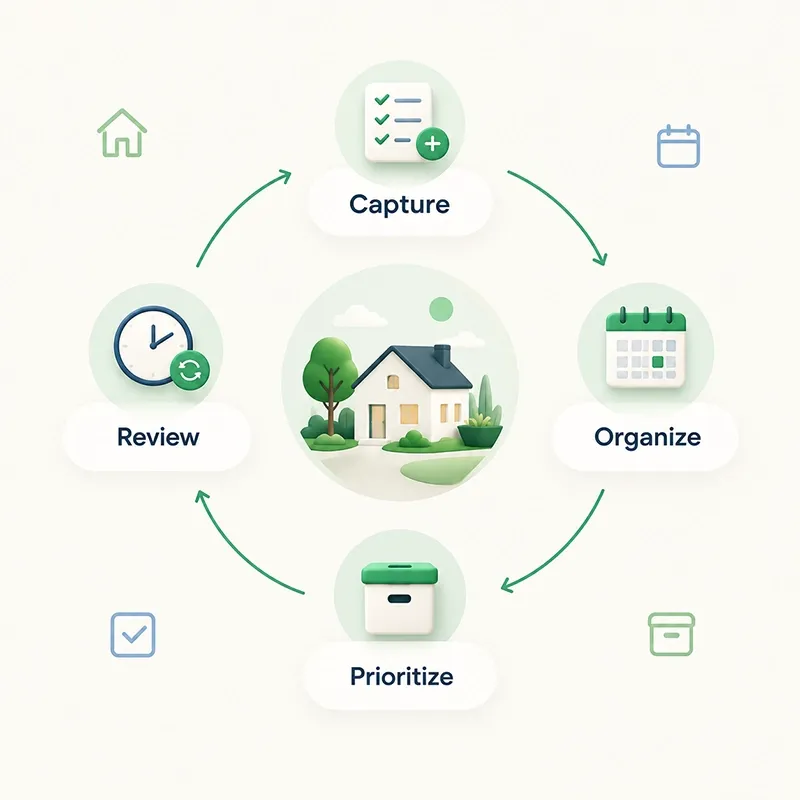
I’ve seen many people try to organize their life by choosing the most complicated tools: advanced apps, several notebooks, and rules they cannot realistically maintain. After a few weeks, the system becomes exhausting, they abandon it, and feel as if they have failed. In practice, the simplest system is often the most sustainable. If maintaining your organization system requires too much time and energy, it probably will not survive real life.
Give Every Open Loop a Place
Unfinished tasks create unnecessary mental load when they have nowhere to go. A simple way to organize your life is to give every “open loop” a home instead of repeatedly remembering it. This follows David Allen’s idea of capturing commitments outside your mind. The solution: give every open loop a place. Once captured and categorized, you can see what needs action, what can wait, and what is simply information.
Category | What It Includes | Where to Store It |
|---|---|---|
Today’s Tasks | Things that need to be done today | Daily task list |
Projects | Tasks that require more than one step | Project list |
Time Commitments | Appointments, meetings, deadlines | Calendar |
Ideas | Thoughts that do not need action yet | Idea list |
Reference | Information you may need later | Reference system |
Concerns | Things that need further thinking | “Review Later” list |
Use Fewer Tools, Not More
More productivity tools do not automatically make you more organized. In fact, switching between calendars, apps, notebooks, and lists can create friction. James Clear’s approach to habits reminds us that behavior becomes easier when the system reduces unnecessary effort. Choose a small set of tools and make each one serve a clear purpose. A simple system is easier to trust and easier to use consistently.
Make Your System Easy to Maintain
A life organization system should work on an ordinary, busy Tuesday—not only on your most productive day. I’ve learned that systems fail when reviewing, updating, or organizing them takes too much effort. Keep your categories simple, review your lists regularly, and remove what no longer matters. The goal is not to build the perfect system; it is to create one you can actually keep organized.
How to Be More Organized in Your Daily Life
Being organized becomes useful when it changes how you spend an ordinary day. I’ve found that the goal is not to fill every hour with tasks, but to make priorities visible. This is where learning how to be more organized in life becomes practical: your time, routines, and responsibilities should support what matters instead of simply keeping you busy.
For example, AI in daily life can make everyday organization easier by helping you plan routines, sort tasks, and keep track of responsibilities—while you remain in control of your priorities.
Organize Your Time Around Priorities
A full calendar does not necessarily mean an organized life. Before planning your day, identify the few priorities that genuinely need your attention. Time management works better when your schedule reflects those priorities rather than every request that arrives. Burkeman’s idea is important here: “You are not supposed to control everything or optimize all your time.” Leave space for life, not just productivity.
Build Small Routines That Remove Repeated Decisions
Good routines make it easier to be more organized without requiring constant motivation. James Clear’s Atomic Habits emphasizes that lasting change comes from small, repeatable systems. Instead of redesigning your entire life, attach simple habits to things you already do: review tomorrow’s tasks before bed, return items to their place, or check your calendar each morning. Small routines reduce friction and repeated decisions.
Create a Weekly Reset
One of the simplest ways to stay organized is to stop expecting your system to maintain itself. A weekly reset gives you time to review unfinished tasks, upcoming commitments, priorities, and responsibilities. I use this kind of review to notice what is no longer important and what needs attention next. Think of it as maintenance, not another productivity challenge: reset the system, then return to real life.
How to Organize Your Life by Reducing What You Have to Manage

So far, we have focused on making life easier to organize: reducing the mental load, simplifying your organization system, and avoiding unnecessary complexity. But there is another powerful approach to personal organization: having less to manage in the first place. We collect possessions, commitments, unfinished tasks, and even activities that simply fill our time. Sometimes the better solution is not organizing more, but reducing what needs to be organized.
Declutter What You Own and Use
Physical organization matters because your surroundings constantly compete for attention. I’ve noticed this myself: when my desk or room becomes crowded, small visual distractions make it harder to focus on the task in front of me. Marie Kondo’s approach helped reinforce an important principle for me: organization should begin with deciding what deserves a place, rather than finding a place for everything you own. A simpler environment creates less friction for everyday life.
If you want to be more organized, start with one small area instead of trying to declutter your entire home. Remove everything, then make a deliberate decision about what stays. Ask whether you use the item, genuinely need it, or have a meaningful reason to keep it. The goal is not to own as little as possible; it is to stop spending time maintaining things that no longer contribute to your life.
A practical decluttering checklist:
- Start with one drawer, shelf, desk, or category.
- Remove items you no longer use.
- Keep things you genuinely need or value.
- Give away or sell useful items you no longer need.
- Recycle or discard items that have no practical use.
- Return the remaining items to clear, consistent places.
Category | What to Keep | What to Do With the Rest |
|---|---|---|
Clothes | Items you wear and genuinely value | Donate, sell, or recycle |
Kitchen | Tools you regularly use | Remove duplicates or unused items |
Books | Books you use, love, or intend to read | Donate or sell |
Desk & Digital Devices | Essential tools and documents | Delete, recycle, or archive |
Miscellaneous | Useful or meaningful possessions | Question whether they deserve the space |
A useful rule is to ask: “If I did not already own this, would I choose to bring it into my life today?” This question prevents past purchases from automatically becoming permanent responsibilities. You can also use a temporary “maybe box” for items you genuinely cannot decide about. Date the box and review it later. If you never need anything inside, that is useful evidence for your decision.
Stop Adding Organization to Things You Don't Need
One of the easiest ways to make organization harder is to organize things that should have been removed. Buying another storage box, creating another list, or building another category can make clutter look controlled without reducing the underlying load. Before you organize something, ask whether it deserves your time, space, or attention at all. This applies to possessions, commitments, subscriptions, notifications, and recurring tasks. Sometimes the most effective organization strategy is simply removing one more thing.
How to Stay Organized When Life Doesn't Go According to Plan
Being organized does not mean having a plan for every possible situation. Real life is unpredictable, and unexpected expenses, delayed plans, family responsibilities, or simply having a difficult day can change everything. A sustainable organization system needs flexibility. The goal of how to stay organized is not to prevent disruption, but to create enough structure that you can adapt without losing track of your priorities, responsibilities, and the things that matter most.
One simple way to create more structure is through paper planning. Writing down your tasks, priorities, appointments, and responsibilities can help you organize your life clearly, even when your plans change unexpectedly.
Leave Room for the Unexpected
One important idea from Four Thousand Weeks is that you cannot control everything or optimize all your time. When you organize your life, leave some space between commitments instead of filling every hour. A flexible schedule gives you room for unexpected tasks, delays, and changes without forcing your entire day off course. This makes your life organization system more realistic because it is designed for real life, not a perfect version of it.
Review, Adjust, and Keep Going
No organization system stays perfect forever because your responsibilities, priorities, and circumstances change. To be more organized, review your system regularly and make small adjustments when something stops working. Look at unfinished tasks, upcoming commitments, routines, and priorities, then decide what still deserves your attention. If a system becomes difficult to maintain, simplify it rather than abandoning it. Consistent adjustment is often more valuable than trying to create a perfect system.
Protect Time That Doesn't Need to Be Productive
An organized life should not turn every free moment into another opportunity for productivity. Rest, hobbies, conversations, quiet mornings, and unplanned time are valuable parts of life, even when they do not produce a measurable result. If your organization system leaves no room for these things, it may be too demanding. Learning how to organize your life should help you create space for what matters, not make every minute feel like another task to manage.
Conclusion
Learning how to be more organized is not about creating a perfect schedule, following endless productivity rules, or controlling every part of your day. It is about building simple systems that reduce mental clutter and make important things easier to manage. By capturing tasks, simplifying routines, organizing your surroundings, and removing unnecessary responsibilities, you can create an organized life that feels practical rather than restrictive.
The most sustainable organization system is one you can continue using when life gets busy, unpredictable, or simply does not go according to plan. Start with one small change, keep your tools simple, and review what works as your priorities change. The goal of how to be more organized is not perfection. It is creating enough clarity, structure, and space to spend more time on what genuinely matters to you.
Was this article helpful?
Next Article
What Does a Financial Planner Do? Duties, Costs, and How to Choose One
Comments(0)
Be the first to leave a comment.